Introduction
Understanding the Common Reasons for AC Water Leakage and How to Fix Them can help you identify problems early. It can also prevent expensive repairs and improve cooling performance. Some leaks are simple to resolve, while others require professional inspection.
Air conditioners naturally produce condensation during the cooling process. Normally, this water flows through a drain system. When something blocks, damages, or interferes with that system, water can escape.
This guide explains the Common Reasons for AC Water Leakage and How to Fix Them. It also covers practical maintenance steps that can reduce the risk of future leaks.
Common Reasons for AC Water Leakage and How to Fix Them
There are several possible causes behind an air conditioner leak. The exact reason depends on the AC type, installation quality, maintenance history, and location of the water.
A professional technician usually checks the drainage system first. They then inspect filters, coils, refrigerant levels, installation angles, and internal components.
Blocked AC Drain Pipe
A blocked drain pipe is one of the most common reasons for AC water leakage. Dust, algae, dirt, and other debris can accumulate inside the pipe.

The blockage prevents condensation from leaving the indoor unit. As water builds up, it may eventually overflow from the drain pan.
This problem is especially common when an AC has not received regular cleaning. High humidity can also encourage algae growth inside the drainage system.
The solution depends on the severity of the blockage. A technician can flush the drain line and remove accumulated debris.
Regular drain cleaning can significantly reduce the chance of repeated leakage. It also helps maintain proper condensation drainage.
Dirty or Clogged Air Filter
A dirty air filter can restrict airflow through the AC unit. When airflow becomes limited, the evaporator coil may become unusually cold.
In some situations, the coil can freeze. When the ice later melts, excess water may overwhelm the drainage system.
Therefore, checking the air filter should be part of basic AC maintenance. Cleaning or replacing the filter can restore proper airflow.
The correct cleaning schedule depends on usage and indoor air quality. Homes with pets, dust, or frequent AC use may require more frequent filter cleaning.
Frozen Evaporator Coil
A frozen evaporator coil can create water leakage after the ice begins melting. Several issues can cause the coil to freeze.
Poor airflow is a common cause. Low refrigerant levels can also contribute to abnormal coil temperatures.
If you notice ice around the indoor unit, switch the AC off. Allow the ice to melt naturally before restarting the system.
However, simply removing the ice does not fix the underlying problem. A qualified technician should inspect airflow and refrigerant conditions.
Continuing to operate an AC with a frozen coil can make the problem worse. It may also reduce cooling efficiency.
Damaged or Rusted Drain Pan
The drain pan collects condensation produced by the evaporator coil. Over time, plastic pans can crack or metal pans can corrode.
A damaged pan may allow water to escape before reaching the drain pipe. This can cause dripping from the indoor unit.
Inspecting the drain pan requires access to the internal AC components. A professional should handle repairs when the pan is difficult to reach.
A cracked pan may need replacement rather than temporary sealing. Proper replacement helps prevent recurring leakage.
Incorrect AC Installation
Incorrect installation can also cause AC water leakage. Indoor units must be positioned correctly for condensation to flow toward the drain.
If the unit is tilted incorrectly, water may collect in the wrong area. Eventually, it can spill from the indoor unit.
Poor drain pipe positioning can create similar problems. The pipe should maintain suitable drainage without unnecessary bends or upward sections.
If leakage started soon after installation, installation quality should be investigated. An experienced technician can check the unit’s position and drainage arrangement.
Low Refrigerant Level
Low refrigerant is another potential reason for AC leakage. Refrigerant does not normally disappear from a properly sealed system.
A low level may indicate a leak or another system problem. Reduced refrigerant pressure can cause the evaporator coil to become too cold.
This can lead to ice formation and water leakage when the ice melts. Other symptoms may include weak cooling and longer compressor operation.
Refrigerant work should always be performed by a qualified professional. Adding refrigerant without finding the cause can provide only a temporary solution.
Dirty Evaporator Coil
Dust and dirt can accumulate on the evaporator coil over time. Heavy buildup can interfere with heat transfer and airflow.
This may contribute to freezing and condensation problems. A dirty coil can also reduce overall cooling efficiency.
Professional coil cleaning can remove stubborn deposits safely. The cleaning method should match the AC type and condition.
Regular maintenance is preferable to waiting until heavy dirt causes performance problems.
Damaged Drain Hose
A drain hose can become loose, cracked, blocked, or disconnected. Any of these issues can cause condensation water to escape.
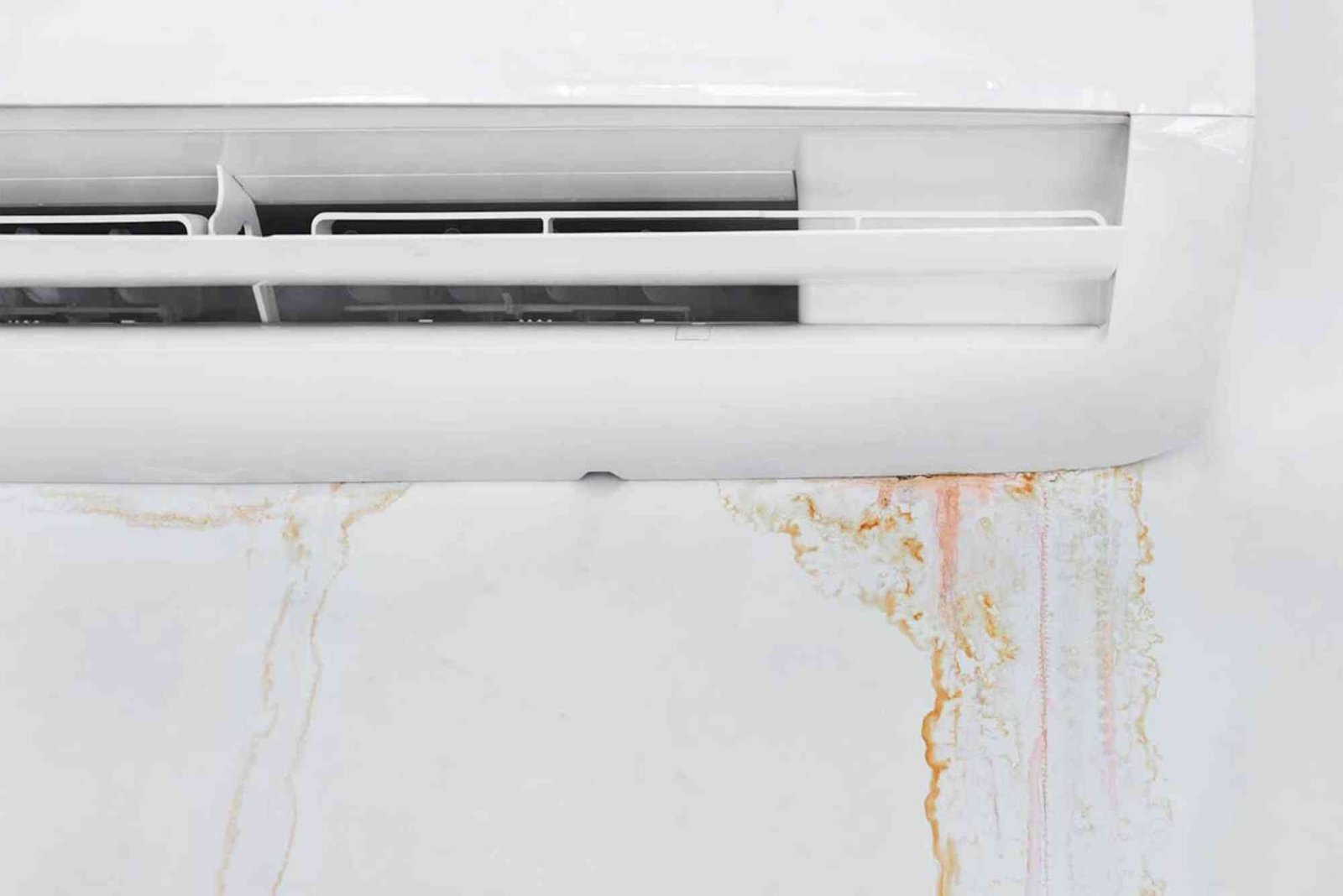
A loose connection may produce water around the indoor unit. A damaged hose may also allow water to drip into walls or ceilings.
The hose should be inspected for cracks and secure connections. Replacement is usually necessary when the material has deteriorated.
High Indoor Humidity
Air conditioners remove moisture from indoor air during normal cooling. In very humid conditions, the system may produce more condensation.
If the drainage system is partially blocked, this extra water can contribute to overflow. Poor ventilation can make humidity problems more noticeable.
Keeping doors and windows closed while the AC operates can improve efficiency. Proper insulation can also help control indoor moisture.
However, unusually high humidity may indicate a larger ventilation or cooling issue.
How to Fix AC Water Leakage Safely
The best solution depends on the source of the leak. Start by turning off the AC if water is reaching electrical components.
Check whether the air filter is visibly dirty. If it is washable, clean it according to the manufacturer’s instructions.
Next, inspect the visible drain outlet for obvious blockage. Avoid forcing sharp objects into the drain because they can damage the pipe.
If you notice ice, turn the system off and allow it to defrost. Do not attempt to break the ice with tools.
Persistent leakage requires professional diagnosis. A technician can inspect the drain system, coil, refrigerant pressure, pan, and installation.
Professional attention is particularly important when water is entering walls or ceilings. Hidden moisture can create costly structural and mould-related problems.
Why Regular AC Maintenance Helps Prevent Leakage
Preventive maintenance is one of the best ways to reduce AC water leakage. Routine service identifies small problems before they become major failures.
During maintenance, technicians can inspect filters and drainage components. They can also check coils, electrical connections, refrigerant conditions, and airflow.
Cleaning the drain system is particularly important. A clear drain allows condensation to leave the unit efficiently.
Maintenance can also improve cooling performance. A clean and properly adjusted AC usually does not need to work as hard.
For busy homes and commercial properties, scheduled maintenance can provide greater reliability throughout the cooling season.
When Should You Call an AC Professional?
Some AC leaks are easy to identify, but others require specialist equipment. Professional assistance is recommended when the cause is unclear.
Call a technician if water continues leaking after basic cleaning. You should also seek help when the AC repeatedly freezes.
Unusual noises, weak cooling, or sudden increases in electricity consumption are additional warning signs. These symptoms may indicate a deeper mechanical or refrigerant problem.
Choosing an experienced service provider can prevent incorrect repairs. Proper diagnosis also helps avoid replacing parts unnecessarily.
For property owners comparing cooling equipment and suppliers, choosing reliable equipment can make long-term maintenance easier. Those looking for carrier ac dubai solutions can explore suitable Carrier AC options for different property requirements.
Likewise, businesses and homeowners researching O General ac UAE systems can consider equipment designed for demanding cooling conditions. Correct sizing and professional installation remain important regardless of the AC brand.
How to Prevent AC Water Leakage
Prevention starts with consistent maintenance and sensible AC operation. Clean or replace filters according to usage and manufacturer recommendations.
Keep the area around the indoor and outdoor units clear. Restricted airflow can affect system performance and contribute to cooling problems.
Have the drain line checked periodically, especially before periods of heavy AC use. Early cleaning can prevent severe blockages.
Do not ignore small water drops. A minor leak can become a significant problem when the underlying cause remains untreated.
Professional servicing is also useful before peak cooling seasons. Early inspection can identify drainage, coil, refrigerant, and installation issues.
Why Ignoring AC Water Leakage Can Be Costly
A leaking AC should never be treated as a minor inconvenience. Continuous moisture can damage paint, plaster, wood, flooring, and furniture.
Water can also reach electrical components. This creates additional safety concerns and may increase repair costs.
Persistent moisture can contribute to unpleasant odours and mould growth. These issues can become harder to resolve when leakage continues for an extended period.
Early action is therefore usually more affordable than delayed repair. Identifying the source quickly protects both the AC and the surrounding property.
Conclusion
Understanding the Common Reasons for AC Water Leakage and How to Fix Them makes it easier to respond when problems appear. Blocked drains, dirty filters, frozen coils, damaged pans, and low refrigerant can all contribute to leakage.
Keeping your home comfortable and functional requires reliable repair services when problems arise. From routine maintenance to unexpected issues, professional assistance can save time, reduce stress, and prevent costly damage. For dependable solutions, expert home repair services provide practical support for different household needs. Learn more about trusted repair options and services at AZ Repairing.
Related Reading: The Ultimate Guide to SS Sheet for Construction Projects
Related Reading: Dishwasher Horror Stories – What NOT To Put In Your Dishwasher!